By: Anneliese Williams
Many individuals who acquire mobility-limiting diagnoses or injuries have a date that divides their lives into before and after. The day they became disabled.

For me, that date is February 4, 2022, the day I woke up paralyzed from a rare autoimmune condition known as axonal Guillain-Barré Syndrome. Before that morning, I had an idea of who I was and a plan for my future. I was a college student at Purdue University aspiring to become a physician, lifelong soccer player, twin, and friend. But overnight, my disability fractured these identities and divided my life into two parts: the life I had always known and the life I had to learn to live.
For a long time, I wanted to get back to the version of myself that could escape onto a soccer field, make plans with friends without considering accessibility, and not think about catheters, blood pressure, or pressure injuries. At first, my life revolved around my appointments, and I believed that doing anything less than everything was giving up on myself. Yet, I felt burnt out, exhausted, and defeated. It took me time– and therapy– to realize how much I was losing by chasing a version of myself that no longer existed and to learn that it wasn’t my wheelchair that was stopping me from feeling like myself again. Learning to accept that my life has a before and an after– and that the after doesn’t have to look like the before to have joy– has come with a lot of grief, but it has also given me new agency.
My disability changed both how the world interacts with me and how I interact with the world, but it doesn’t get to define who I am. I do.
Navigating a World That Wasn’t Built for Me
One of the first places I returned after rehabilitation was my college campus. I was excited to be back, but I quickly found that the campus I returned to felt nothing like the campus I had left. My classrooms were said to be accessible, yet, I rolled into my first class to find a built-in desk installed within two feet of the door, preventing me from entering in my wheelchair. This experience was my first wake-up call into the world I now live in every day.
Before my disability, I took for granted that I was living in a world built for people like me. Now, accessibility is not something I can ignore– it is something I have to plan for because if I don’t, often no one will have. Curb cuts, ramps, accessible bathrooms, and accessible transportation now shape if, and how, I can participate.
The after has been about more than physical accessibility though. With my disability, I lost my “incognito mode.” The rehab hospital taught me wheelchair skills to navigate the community, but no one prepared me for what it would feel like to be constantly noticed everywhere I go. Daily, I get stares, questions like “What’s wrong with you?” from strangers, and comments like “I’m proud of you” for existing, shopping, or flying on a plane. While these interactions may seem insignificant, especially since people mean well, the constant nature of them weighs me down. These interactions also reflect the biases I encounter: as a wheelchair user, people often perceive me as incapable and are surprised by me existing in normal places. These biases don’t define me– but they do affect me.
Although I have found friends and communities who help carry these burdens, something I value deeply, I still long for the world where I am seen as more than my wheelchair, where I belong, and where I can just go about my day like anyone else.
Redefining Who I Am and What Matters
My disability has also shaped who I am. Laying in the ICU, hooked up to catheters, IVs, a feeding tube, and a ventilator, I didn't recognize my body and, unable to move or talk, I didn't feel like a student or an athlete. Yet, closing my eyes, I felt like the same Anneliese I was before.
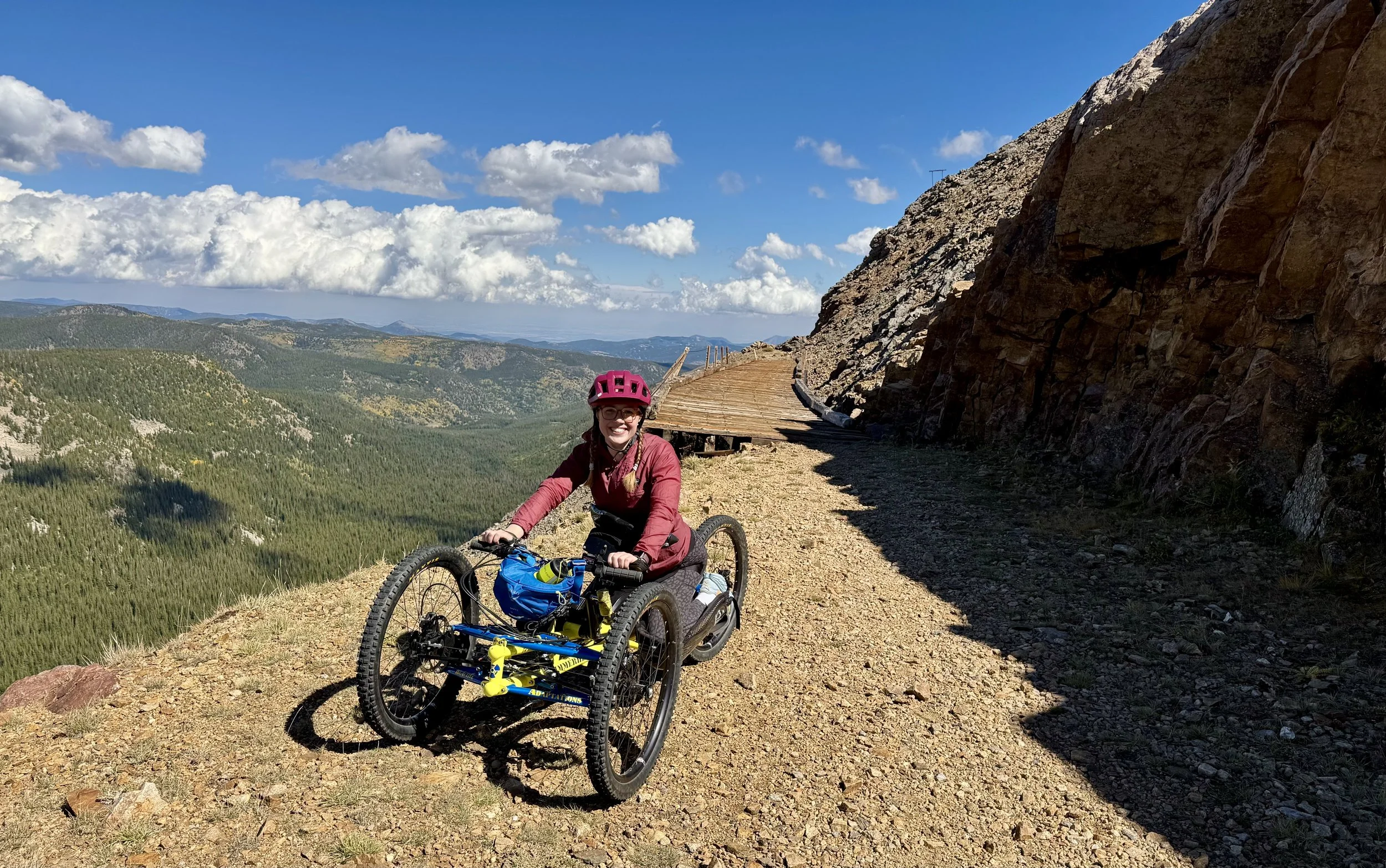
In the following months, I spent a lot of time questioning who I was and who I wanted to be. I was angry about what my disability had taken from me (and often still am). But in taking away so much of what I had defined myself by, my disability changed how I value time, shifted what matters to me, and gave me space to lean into who I want to be outside of my abilities.
Before my paralysis, I had been in a hurry to get to my future, convinced that sacrificing the present would pay off later. Suddenly, I was being told I might not survive. My diagnosis didn't care about my plans. My only guarantee was today. At the same time, the people who showed up for me— my sister staying with me, a friend flying in just to visit, and nurses advocating for me— helped me realize that I didn't need to be the smartest, strongest, or fastest to make a difference.
I still pursue recovery and have many hopes for my future, but I am also more intentional about living in a way that I won’t regret if I do not get a tomorrow.
Moving Forward
It took me time to accept that even if I relearn to walk, I will never get back to who I was before my disability and to realize that accepting that doesn’t mean I’m giving up on myself or my recovery. Instead, accepting that I am now in the after has given me agency to ask what I want to make of my future, who I want to be, and what I want to accomplish. Letting myself imagine my future as a wheelchair user took bravery, but with it, I gained so much freedom.
That doesn’t mean the after is easy: I still grieve the spontaneity, ease, and life I had before and probably will for as long as I am disabled. There are days when I cry because paralysis is hard. In therapy, I am still working on how to respond when strangers ask what is wrong with me. But I am proud of the person I have become, not just in spite of my disability but in many ways, because of it.
Everyone’s path after a life-changing diagnosis or injury is different. There is no right or wrong, but I encourage you to reflect on how your disability has changed your life, to ask yourself hard questions, and to let yourself imagine who you want to be– even if you never walk again.
